
Ustensiles et équipement
Durable tools for everyday cooking
We focus on enduring build quality over disposable novelties, so each piece earns its place in a home kitchen.
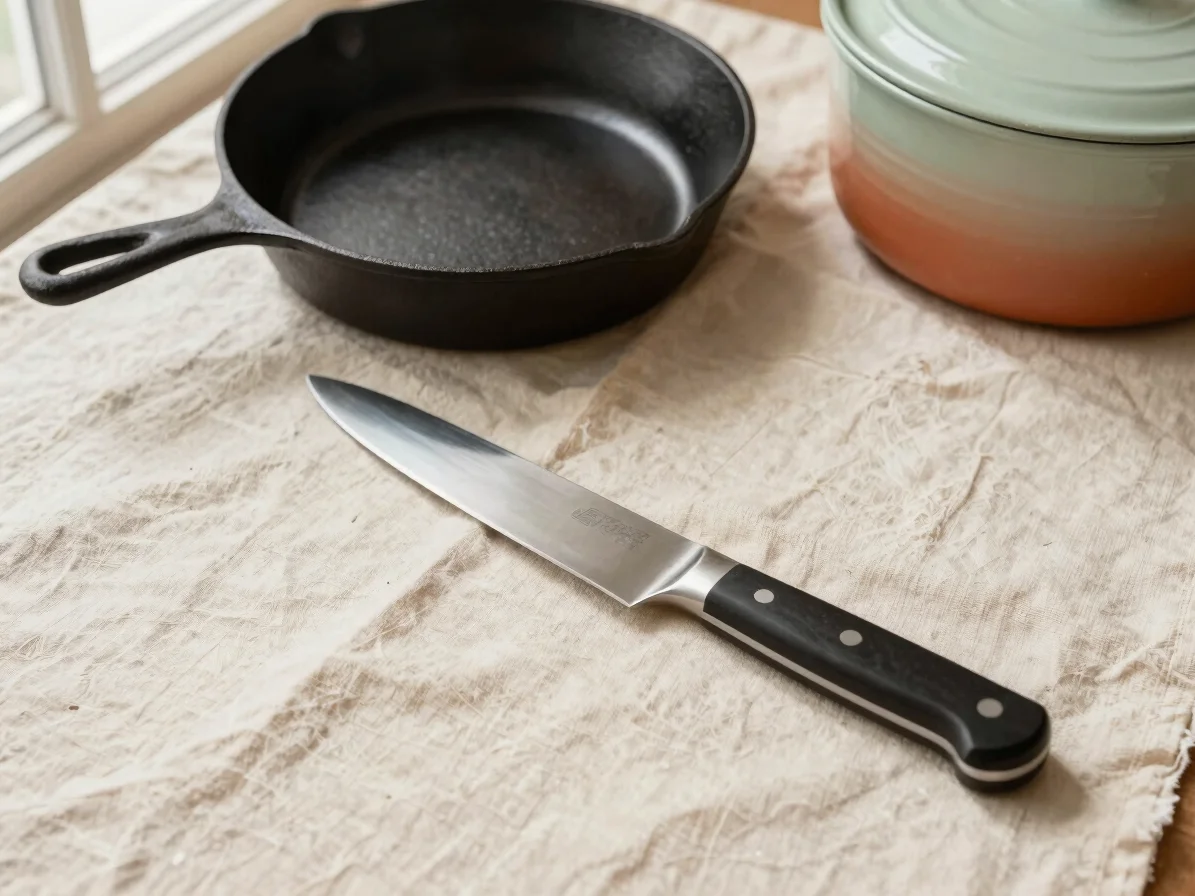
Three essentials
The tools that do the daily work
Chef knives, heavy skillets and enameled pots cover most home cooking. Their value lies in how they hold an edge, conduct heat and feel in the hand.
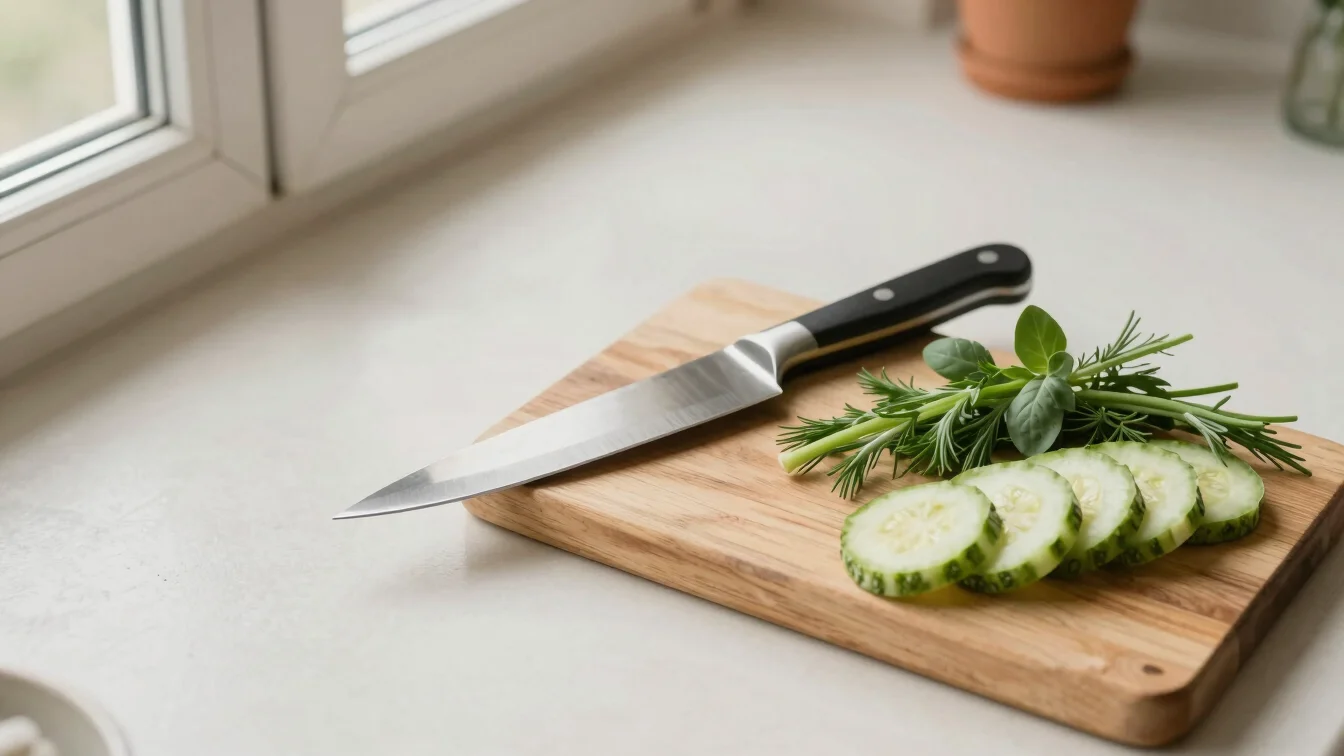
Chef knife
A well-balanced blade of about 20 cm handles most chopping, slicing and dicing. Look for steel that holds an edge and a handle that sits comfortably in your grip.
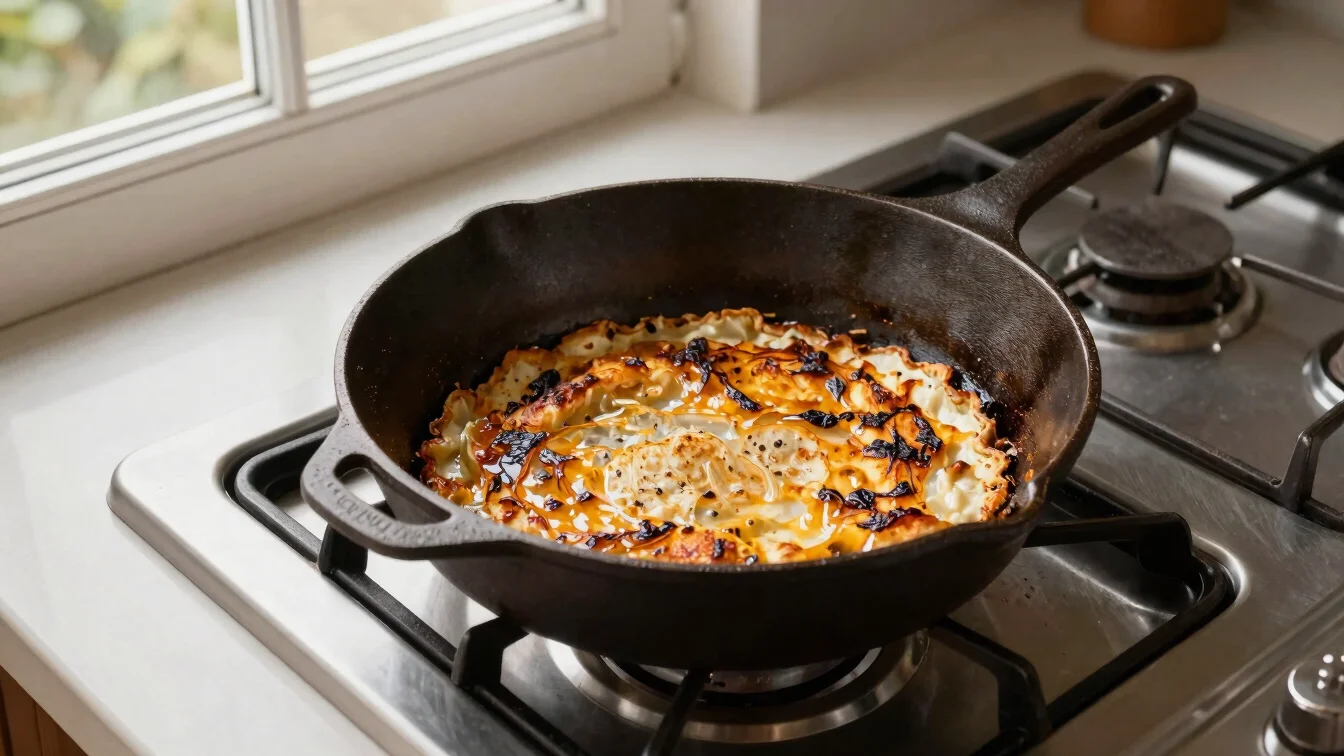
Heavy skillet
A thick-walled skillet retains heat for searing and browning. Cast iron rewards patience and, with simple seasoning, lasts for decades.
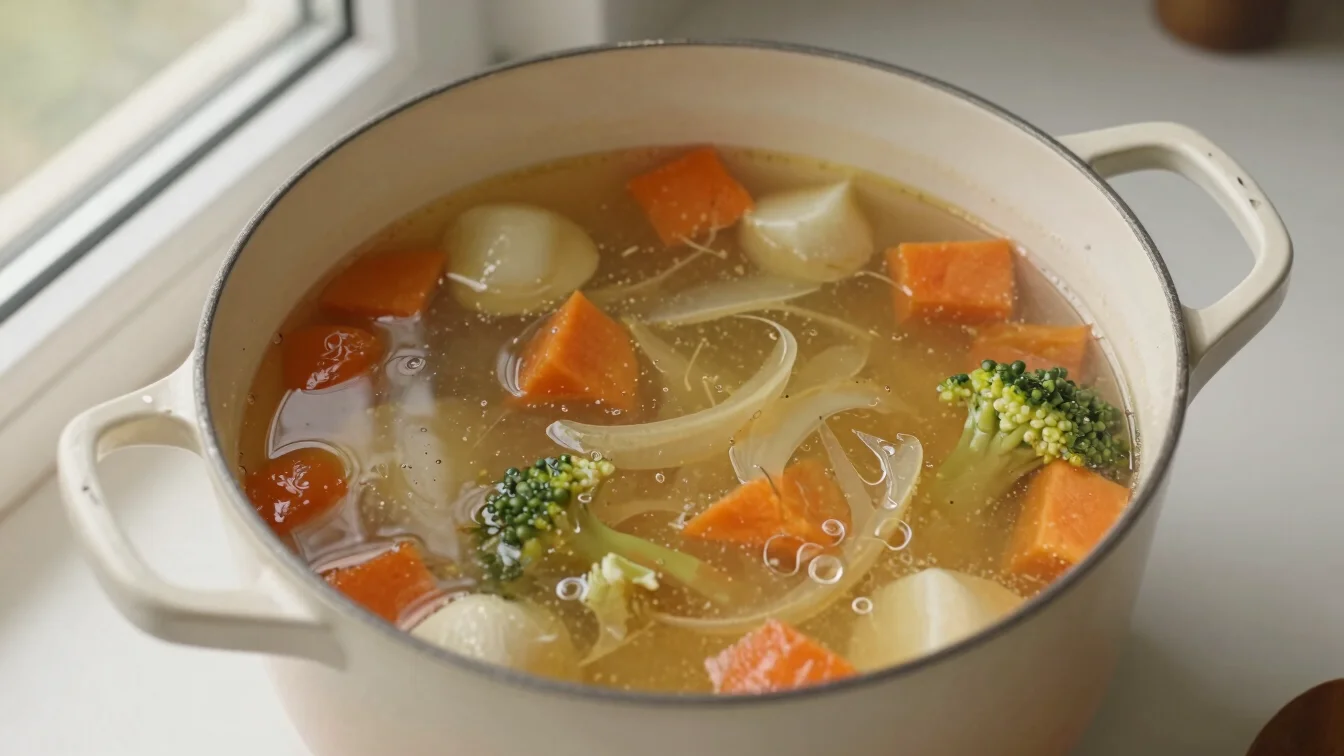
Enameled pot
An enameled pot is versatile for braises, soups and stews. Its non-reactive coating makes acidic ingredients easier to cook and clean.
Everyday care
Keeping your tools working for years
Sharp edges
Hone your knife regularly on a ceramic rod and sharpen it on a whetstone when the edge dulls. Hand-wash it, dry it at once and store it on a magnetic strip or in a block, never loose in a drawer.
Seasoning cast iron
Dry the pan thoroughly after washing, then rub a thin layer of neutral oil over the surface and heat it until the oil no longer looks wet. Repeat as needed; the surface builds up with use.
Extending tool life
Avoid dishwashers for knives and wooden handles, and do not let cast iron soak. Let cookware cool before rinsing to prevent warping, and replace worn parts such as lids or handles instead of the whole piece.
These are practical habits rather than official manufacturer guarantees; always follow the care instructions supplied with your equipment.